Compare Venue Booking Options: Procurement & Contracting Guide
Procuring commercial event properties has evolved significantly. It is no longer a decentralized administrative chore, but rather a rigorous multi-variable optimization problem.
Modern organizations face an increasingly fragmented market. This includes global corporations executing multi-city rollouts and medical associations managing complex congresses. They must navigate physical spaces, digital platforms, and bundled contractual frameworks. Navigating this landscape requires moving far beyond surface-level rate comparisons. Planners must examine the underlying mechanics of liability assignment, master service agreements, and hidden operational overhead.
Evaluating these selections demands a robust analytical framework. This framework exposes hidden costs and structural risks embedded in standard venue agreements. Whether weighing direct municipal convention center leasing against automated booking marketplaces or private estate buyouts, core mechanics matter. Factors like attrition, force majeure clauses, and cancellation penalties dictate long-term fiscal viability.
This document serves as an exhaustive technical manual. It guides professionals in understanding, evaluating, and executing a sophisticated workflow to compare venue booking options across diverse real estate and hospitality markets.
Understanding “compare venue booking options”
Analyzing professional strategies to compare venue booking options requires separating consumer reservations from enterprise-grade group procurement. The global acquisition market is bifurcated into two distinct operational channels.
The first channel comprises direct bilateral negotiations. Planners contract directly with property general managers or event directors, customizing terms around multi-year commitments, custom room blocks, and food-and-beverage minimums.
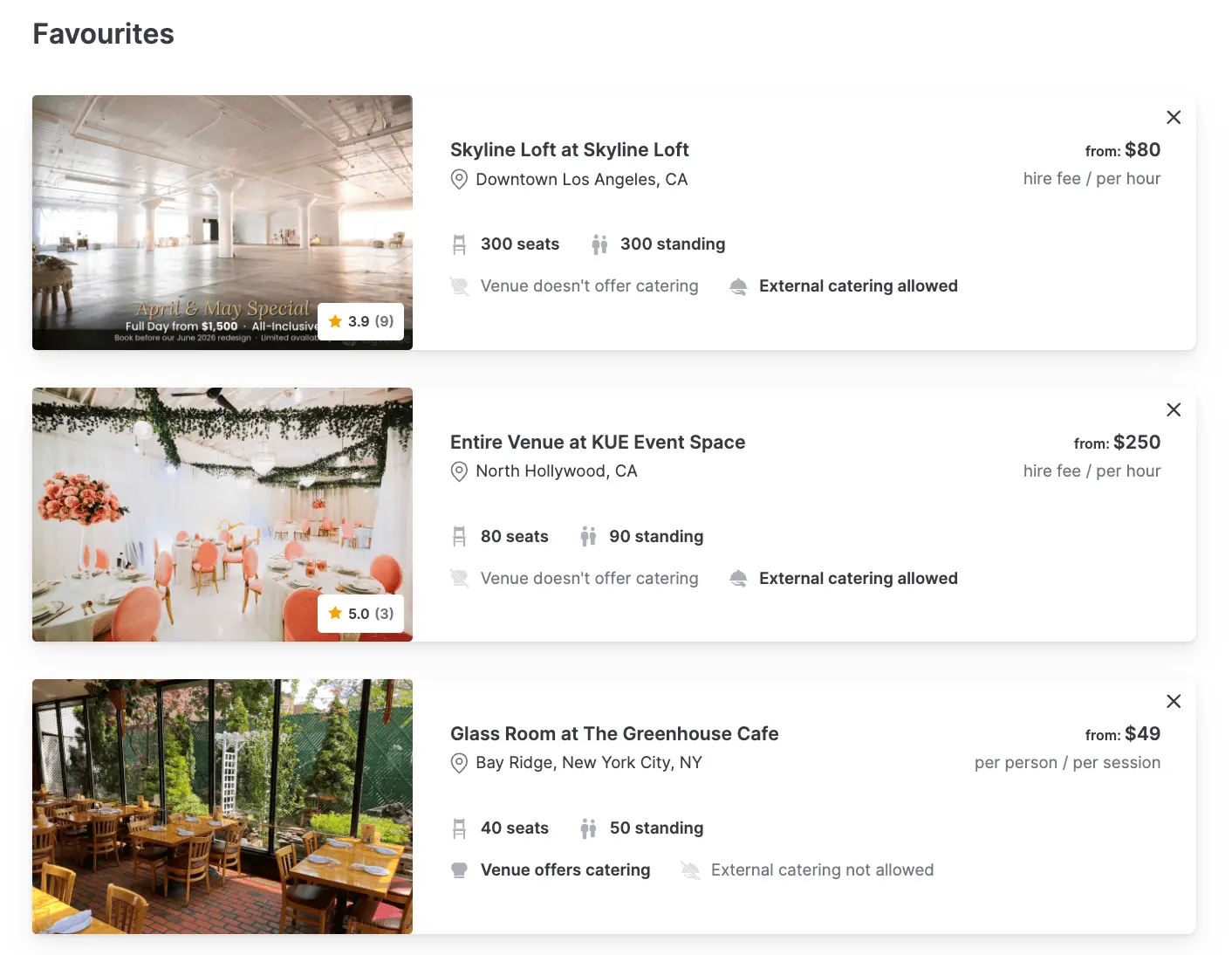
The second channel includes digital aggregators and programmatic platforms. These standardize requests for proposals (RFPs) and automate initial contract generation.
A critical oversight in event planning literature is conflating these procurement pathways. Digital marketplaces simplify initial discovery and aggregate properties into a dashboard. However, they frequently obscure rigid cancellation riders and mandatory administrative surcharges in the fine print.
Conversely, direct bilateral negotiations allow for bespoke clause tuning. Yet, they demand intense legal oversight and considerable administrative lead time. Utilizing insights from venue comparisons requires an acute awareness of these transactional trade-offs.
Reviewing agreements through a casual vacation rental lens guarantees miscalculations. Planners often misjudge master folio liability, tax exemptions, and third-party commission disclosures. Ultimately, securing commercial space involves navigating complex indemnity clauses, insurance certificates, and multi-quarter financial commitments.
Deep Contextual Background: The Evolution of Venue Procurement Models
The lineage of venue procurement traces its roots directly to the expansion of mid-20th-century metropolitan exhibition bureaus and early corporate travel departments. As global commerce accelerated following the post-war era, corporations and associations required standardized methods to secure large-scale meeting spaces without relying exclusively on fragmented telephone inquiries and paper ledgers. These early procurement models relied heavily on regional sales representatives, physical mail-in RFPs, and static rate sheets distributed annually to corporate travel coordinators. These rudimentary systems created massive administrative bottlenecks, high error rates in room-block management, and limited transparency regarding true net costs.
As enterprise software and telecommunications matured through the late 1980s and 1990s, the introduction of computerized global distribution systems (GDS) and electronic RFP networks revolutionized venue sourcing. Properties began publishing inventory through centralized digital clearinghouses, enabling corporate buyers to evaluate multiple locations simultaneously. This technological shift transitioned the industry from localized paper negotiations to standardized digital pipelines. Concurrently, the rise of specialized strategic meetings management (SMM) programs in the early 2000s allowed large enterprises to consolidate their venue spending across preferred hotel chains, leveraging aggregate volume to secure favorable contract terms, uniform safety standards, and reduced liability exposure.
Conceptual Frameworks and Mental Models
To evaluate the operational stability and financial exposure of competing venue agreements, industry professionals rely on several core mental models:
-
The Total Cost of Acquisition (TCA) Model: This framework calculates all direct and indirect expenses associated with a venue contract—including base rental fees, mandatory service charges, temporary infrastructure importation, and potential attrition penalties—providing a true baseline comparison beyond the headline room rate.
-
The Contractual Flexibility Index: This model measures a booking agreement’s resilience against unforeseen schedule disruptions. It evaluates sliding-scale cancellation windows, force majeure definitions, and attrition reduction clauses to determine financial liability if event scope shrinks.
-
The Procurement Friction Ratio: This metric tracks the administrative labor hours, legal review cycles, and communication friction required to move a venue contract from initial RFP submission to final executive signature.
Key Categories or Variations
When analyzing these structural variations, sound decision logic dictates that direct bilateral agreements provide maximum protection and customization for large-scale corporate summits, whereas programmatic marketplaces offer rapid deployment and simplified contracting for smaller, agile regional gatherings.
Detailed Real-World Scenarios and Decision Logic
Selecting Between a Direct Hotel MSA and a Programmatic Marketplace for a Regional Roadshow
When an enterprise marketing team plans a five-city regional roadshow requiring mid-sized meeting spaces and 50 sleeping rooms per city, the decision logic requires weighing the administrative efficiency of a programmatic marketplace against the risk mitigation of direct hotel MSAs. While the marketplace allows instant booking across multiple cities with a single click, its standardized cancellation policy forfeits the entire deposit if a local city event must be postponed. Opting for direct bilateral agreements in each market, though slower to negotiate, allows the inclusion of force majeure riders tailored to regional disruptions.
Negotiating Attrition Clauses for an Uncertain Association Congress
Inside an international medical association preparing an annual congress where attendance numbers fluctuate based on recent clinical trial announcements, the primary risk is severe room-block attrition penalties. The decision logic dictates rejecting standard hotel contracts that demand a rigid 80 percent pick-up threshold 90 days out. Instead, the procurement team must negotiate a cumulative performance clause and a sliding-scale reduction milestone—such as three permitted 15-percent block drops at 120, 90, and 60 days before arrival—protecting the association from absorbing thousands of dollars in unreserved room liabilities.
Planning, Cost, and Resource Dynamics
The financial architecture of securing commercial event space extends far beyond basic rental line items. Evaluating competing proposals requires accounting for the hidden economic drag of administrative overhead, compliance auditing, and penalty exposure.
The opportunity cost of failing to audit vendor contracts thoroughly during the initial procurement phase is catastrophic, often resulting in unbudgeted service surcharges and rigid legal liabilities. Consequently, financial allocation models must heavily weight comprehensive risk assessment and legal vetting in early project stages.
Tools, Strategies, and Support Systems
-
Strategic Meetings Management (SMM) Platforms: Enterprise software suites designed to centralize global venue sourcing, enforce corporate travel policies, and track aggregate spending across preferred properties.
-
Automated RFP Distribution Portals: Digital systems that broadcast standardized venue requirements to hundreds of hotels simultaneously, accelerating the initial comparison phase.
-
Contract Clause Analysis Software: Specialized legal technology tools configured to scan hotel MSAs for predatory attrition terms, unfavorable indemnity clauses, and hidden fees.
-
Master Folio Auditing and Expense Management Tools: Proprietary financial platforms used by corporate accounting teams to verify post-event hotel invoices against contracted rate sheets.
-
Preferred Vendor Partnership Databases: Internal corporate repositories tracking historical performance, service quality, and negotiated discount tiers for repeat venue partners.
-
Virtual Reality Site Inspection Suites: High-resolution digital platforms allowing procurement teams to evaluate spatial layouts and property conditions without physical travel.
Risk Landscape and Failure Modes
-
Hidden Administrative Surcharges: Overlooking mandatory service charges, energy fees, and administrative markups hidden in venue contracts can inflate final operational budgets by up to thirty percent.
-
Unfavorable Indemnity and Liability Assignments: Signing standard venue contracts without legal review can force the host organization to assume full financial liability for third-party vendor accidents or property damage.
-
Rigid Force Majeure Limitations: Inadequate force majeure definitions that fail to account for modern geopolitical, health, or infrastructure disruptions can trap organizations in non-refundable venue contracts during crises.
Governance, Maintenance, and Long-Term Adaptation
Operating a scalable enterprise venue procurement program requires rigorous internal governance, multi-party communication protocols, and continuous auditing cycles.
-
Layered Maintenance Checklist:
-
Quarterly Preferred Vendor Audits: Regular review of contracted hotel rates, service levels, and compliance metrics to ensure corporate partnerships remain advantageous.
-
Annual Contract Clause Library Updates: Periodic revision of standard legal templates and force majeure definitions in response to evolving global risk landscapes.
-
Pre-Event Compliance Sign-Offs: Mandatory legal and financial review checkpoints before any high-value venue contract is executed by regional planners.
-
Post-Event Vendor Performance Retrospectives: Comprehensive debriefs synthesizing billing accuracy, staff responsiveness, and contract fulfillment to inform future sourcing decisions.
-
-
Environmental Adaptation Triggers: Evolving corporate sustainability mandates require pre-established operational adjustments within venue procurement guidelines. For instance, if institutional ESG frameworks mandate carbon-neutral meetings or verified green-certified properties, procurement teams must integrate mandatory sustainability reporting clauses directly into the venue selection and contracting criteria.
Measurement, Tracking, and Evaluation
-
Procurement Cycle Time (PCT): A quantitative tracking metric measuring the exact elapsed days between initial RFP submission and final executed venue contract.
-
Sourcing Savings Variance (SSV): The statistical variance between projected budget allocations and actual final contracted expenditures achieved through strategic negotiation.
-
Master Billing Error Rate (MBER): The percentage of contested line items identified during post-event invoice reconciliation audits relative to total contract value.
-
Preferred Venue Compliance Ratio: A metric tracking the percentage of corporate events booked within officially vetted and contracted preferred properties versus unvetted external venues.
Common Misconceptions and Oversimplifications
-
Programmatic venue booking platforms eliminate the need for legal contract review. Standard digital terms of service on booking marketplaces often favor property owners heavily, exposing organizations to severe cancellation and liability risks if not carefully reviewed.
-
Attrition clauses only apply to large multi-day convention hotels. Even small boutique properties enforce strict room-block pickup thresholds and financial penalties for unreserved inventory.
-
Third-party sourcing agencies are always free for the corporate buyer. While agencies typically collect commissions from properties, these fees can sometimes be bundled into higher room rates or limit direct negotiating leverage.
-
Force majeure clauses automatically cover all unexpected global emergencies. Many legacy venue contracts feature narrow force majeure definitions that exclude widespread travel restrictions, labor strikes, or regional utility failures unless explicitly added via rider.
-
Standard corporate rates are universally available across all seasonal peaks. Preferred hotel program rates are frequently blacked out during high-demand convention periods or major local events, forcing corporate buyers into dynamic market pricing.
-
Venue contract negotiation ends once the deposit invoice is paid. Continuous monitoring of room pickups, billing routing, and concession fulfillment is mandatory throughout the entire planning lifecycle to prevent contract breaches.
Ethical, Practical, and Contextual Considerations
The execution of commercial venue procurement agreements introduces significant administrative responsibilities regarding data privacy, anti-corruption compliance, and corporate ethics. Collecting, processing, and storing sensitive financial and personal data for corporate delegations requires strict adherence to global privacy frameworks like GDPR and CCPA. Furthermore, corporate procurement teams must navigate complex vendor gifting policies and anti-bribery regulations (such as the FCPA) to ensure that venue site inspections and FAM (familiarization) trips do not create perceived or actual conflicts of interest. Maintaining uncompromising ethical standards while securing optimal commercial terms remains a defining challenge for modern event and procurement leaders.
Conclusion
The procurement and comparison of commercial event properties requires a sophisticated synthesis of financial analysis, legal risk management, strategic negotiation, and operational oversight. Effective venue acquisition demands absolute attention to total cost of acquisition, flexible contractual terms, and rigorous post-event auditing. Navigating this sector successfully requires looking past superficial promotional marketing to evaluate the underlying mechanics of liability assignment, attrition liabilities, and service fee transparency. As corporate expectations, legal frameworks, and digital tools continue to evolve, the framework for sustainable, high-performance venue procurement will mature, offering disciplined organizations a definitive path toward fiscal efficiency and long-term operational resilience.