Top Conference Experiences in America: The Definitive Guide
The contemporary landscape of professional assembly in the United States represents a complex convergence of intellectual exchange, commercial networking, spatial engineering, and high-stakes capital investment. When organizations, industry consortia, and global enterprises design large-scale gatherings, the success of the initiative relies on far more than assembling speakers on a stage or booking blocks of hotel rooms. It requires choreographing environments where human attention, digital connectivity, and physical architecture interact seamlessly to generate measurable professional value.
Evaluating what constitutes an exceptional gathering involves dissecting the structural anatomy of major professional assemblies across diverse industrial sectors. From medical congresses in sprawling convention centers to intimate technology salons in urban architectural landmarks, the mechanics of professional convening are undergoing rapid transformation. This document serves as an exhaustive technical manual for analyzing, designing, and optimizing the structural elements that define premier professional assemblies, establishing the definitive baseline required to navigate top conference experiences in America across complex operational domains.
Understanding “top conference experiences in America”
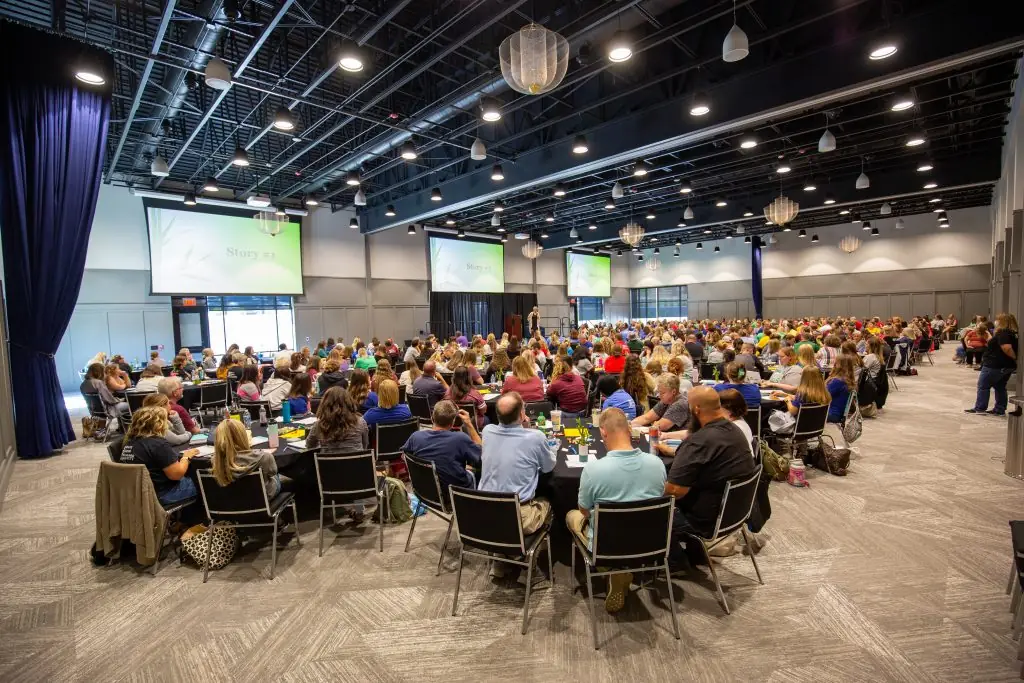
Analyzing the core criteria that define top conference experiences in America requires moving past surface-level attendance figures, flashy keynote presentations, and promotional marketing collateral. True professional value stems from an intricate alignment of content curation, cognitive ergonomics, acoustic engineering, spatial flow, and community architecture. The domestic professional convention market operates across distinct functional tiers, ranging from massive multi-sector trade expositions hosting tens of thousands of participants to highly specialized peer-to-peer symposiums focused on breakthrough technical research or executive leadership.
A persistent miscalculation in corporate event strategy is assuming that high financial investment automatically guarantees an exceptional participant journey. In practice, events backed by massive budgets frequently suffer from depersonalization, cognitive overload, rigid scheduling, and vast physical transit corridors that exhaust attendees before meaningful engagement occurs. Utilizing insights surrounding top conference experiences in America demands an analytical focus on micro-community formation, content modularity, low-friction digital infrastructure, and purposeful spatial zoning. Reviewing these professional ecosystems through an architectural and sociological lens demonstrates that fostering serendipitous peer collaboration and intellectual safety yields far greater long-term professional impact than relying on celebrity speakers alone. The reality of engineering exceptional professional gatherings involves balancing complex union labor rules, multi-track schedule collisions, accessibility mandates, and rigorous cognitive pacing.
Deep Contextual Background: The Evolution of American Professional Assemblies
The lineage of professional conventions in the United States traces its origins to the nineteenth-century scientific societies, agricultural trade fairs, and industrial associations that emerged alongside the expansion of transcontinental rail networks. As specialized industries developed distinct professional identities, annual meetings became critical mechanisms for standardizing practices, establishing credentials, and disseminating technical innovations. Following the Second World War, the rise of commercial aviation and the construction of massive urban convention centers transformed these regional gatherings into multi-million-dollar institutional enterprises capable of drawing global delegations.
Over the final decades of the twentieth century and into the digital era, professional assemblies underwent another radical evolution driven by personal computing, high-speed telecommunications, and the integration of digital media. The widespread adoption of hybrid participation models, mobile event applications, and advanced data analytics shifted the focus of physical gatherings from simple information broadcasting to high-value experiential networking and interactive problem-solving. This ongoing structural progression turned event production from an administrative hospitality task into an interdisciplinary science encompassing cognitive psychology, spatial design, and enterprise risk management.
Conceptual Frameworks and Mental Models
To evaluate the operational quality and intellectual impact of any major professional convention, industry professionals rely on several core mental models:
-
The Cognitive Load and Pacing Matrix: This framework maps participant attention spans and mental fatigue across multi-day schedules, ensuring that intensive plenary sessions are balanced with unstructured networking intervals and restorative downtime.
-
The Spatial Serendipity Grid: This mental model analyzes physical floor plans, thoroughfares, and lounge layouts to maximize accidental professional encounters and cross-disciplinary collaborations among attendees.
-
The Content Modularity and Choice Architecture Model: This analytical framework evaluates how session tracks, workshop formats, and asynchronous digital resources empower attendees to tailor their intellectual journey without experiencing severe choice paralysis.
Key Categories or Variations
When analyzing these structural variations, sound decision logic dictates that failing to balance content density with adequate unstructured networking time represents the most common structural flaw in professional convention design.
Detailed Real-World Scenarios and Decision Logic
Engineering a Multi-Track Technology Conference for Enterprise Engineers
Organizing annual developer conferences for twelve thousand technical specialists requires evaluating complex venue footprints across major metropolitan convention centers. Decision logic mandates establishing decentralized stage clusters and high-capacity hardwired power drops for live-coding demonstrations. Planners must also provide robust localized Wi-Fi networks capable of supporting thousands of simultaneous container deployments. Selecting monolithic schedules without accounting for inter-building walking times or network saturation causes severe operational failure. Keynote overruns cascade rapidly into widespread session delays and frustrated attendees.
Structuring an Exclusive Leadership Roundtable for Healthcare Executives
Organizing closed-door strategic symposia for medical executives requires isolated luxury destination resorts. Prioritizing confidential regulatory debate and sensitive peer benchmarking demands complete acoustic isolation and secure digital communication channels. Enforcing a strict no-media policy protects sensitive discussions. The resulting operational structure ensures high participant candor and deep intellectual engagement. However, success requires meticulous vetting of all service staff and strict control over physical venue access.
Planning, Cost, and Resource Dynamics
The financial architecture of evaluating and participating in major professional gatherings requires a sophisticated understanding of direct versus indirect expenditures, opportunity costs, and variable operational budgets.
The opportunity cost of failing to optimize content delivery or neglecting attendee networking facilitation is severe, frequently resulting in diminished participant retention, negative net promoter scores, and declining year-over-year registration revenue. Consequently, financial allocation models must heavily weight audience engagement metrics, instructional design expertise, and rigorous post-event ROI evaluations.
Tools, Strategies, and Support Systems
-
Enterprise Event Management Platforms: Comprehensive digital software systems (such as Cvent, Swapcard, or Hopin) managing attendee registration, mobile applications, and matchmaking algorithms.
-
Advanced Spatial Mapping and CAD Software: Precision design tools modeling room capacities, fire egress paths, and acoustic zoning within complex convention venues.
-
Audience Engagement and Polling Analytics Tools: Real-time digital feedback systems tracking session attendance velocity, Q&A participation, and instant participant sentiment.
-
Specialized Content Curation Advisory Panels: Industry expert committees retained to review abstract submissions, vet speaker credentials, and maintain rigorous intellectual standards.
-
Bandwidth Stress-Testing and Network Monitoring Suites: Specialized IT protocols assessing wireless concurrency limits and hardwired fiber-optic stability before event opening.
-
Post-Event Data Analytics and Sentiment Dashboards: Advanced business intelligence platforms aggregating survey responses, badge-scan movements, and financial folios.
Risk Landscape and Failure Modes
-
The Cognitive Overload Trap: Packing multi-track agendas with back-to-back presentations without adequate breaks, leading to severe attendee burnout and empty afternoon sessions.
-
Network Infrastructure Collapse: Failing to provision adequate enterprise Wi-Fi bandwidth, resulting in total system failure during live interactive workshops or digital voting sessions.
-
Keynote Attrition and Talent Default: Relying exclusively on high-profile external speakers without establishing backup presenters or robust virtual fallback options in case of sudden travel emergencies.
Governance, Maintenance, and Long-Term Adaptation
Operating or participating in major professional event portfolios across enterprise organizations requires strict adherence to corporate governance standards, continuous audit regimes, and proactive risk management.
-
Layered Maintenance Checklist:
-
Comprehensive Program Audit: Systematic review of all session proposals, speaker credentials, and learning objectives conducted six months before execution.
-
Spatial and Logistical Walkthrough: Detailed physical inspection of venue choke points, registration hubs, and ADA accessibility compliance thirty days prior to doors opening.
-
Digital Infrastructure Stress Test: Full-scale simulation of attendee registration spikes and mobile application concurrency testing two weeks before the event.
-
Post-Event Review and Stakeholder Debrief: Mandatory evaluation meeting conducted with organizing committees and venue partners within fourteen days of event conclusion to document strategic takeaways.
-
-
Environmental Adaptation Triggers: Evolving sustainability standards, shifting corporate travel policies, and changing accessibility regulations require pre-established operational adjustments within event planning frameworks. Corporate sustainability mandates often demand aggressive carbon footprint reduction. Organizing teams must integrate zero-waste catering protocols, digital signage standards, and hybrid attendance options into their operational blueprint. They must achieve these measures without compromising the overall quality of in-person interactions.
Measurement, Tracking, and Evaluation
-
Attendee Net Promoter Score (NPS): A quantitative metric tracking overall participant satisfaction and likelihood of recommending the conference to industry peers.
-
Session Engagement and Utilization Index (SEUI): Tracking actual room capacity percentages and average session retention rates across multi-track schedules.
-
Networking Velocity and Matchmaking Success Rate (NVMSR): Measuring the volume of verified professional connections and meetings facilitated through event networking platforms.
-
Content Retention and Continuing Education Completion Rate (CECR): Quantifying the percentage of attendees who complete accredited educational sessions or post-event testing modules.
Common Misconceptions and Oversimplifications
-
Booking famous keynote speakers guarantees a successful and memorable conference experience. High-profile speakers drive initial registrations, but long-term participant satisfaction depends on the quality of peer networking, workshop interactivity, and operational execution.
-
Transitioning a major professional conference entirely to a virtual format delivers identical networking value at a fraction of the cost. Virtual platforms struggle to replicate the accidental encounters, emotional resonance, and deep trust generated by physical co-presence.
-
Large convention centers are inherently superior venues for all types of professional gatherings. Massive convention halls can feel sterile and exhausting for smaller executive retreats or highly specialized academic symposia that thrive in boutique environments.
-
Event Wi-Fi performance is solely the responsibility of the venue’s standard internet provider. Enterprise conventions require dedicated, isolated fiber-optic pipes and customized firewall configurations managed by specialized network engineers.
-
Designing an event schedule with zero overlapping sessions eliminates all attendee decision fatigue. Forcing single-track agendas on diverse audiences with varying professional interests limits personalization and alienates specialized practitioners.
-
Collecting post-event survey feedback once the conference concludes provides sufficient data for future planning. Effective event optimization requires real-time pulse tracking, badge-scan analytics, and daily operational reviews during the live event.
-
Smaller regional workshops do not require formal risk management or ADA accessibility planning. Gatherings of any scale involving physical assembly are subject to strict legal accessibility standards and emergency egress regulations.
-
Once a speaker roster and session schedule are published, no further content adaptation is necessary. Dynamic professional fields require flexible programming structures capable of incorporating breaking industry developments right up to the event date.
Ethical, Practical, and Contextual Considerations
Designing and executing major professional assemblies introduces major responsibilities. Planners must manage intellectual property protection, professional ethics, accessibility compliance, and inclusive community building.
Enterprise-grade gatherings demand strict adherence to anti-harassment policies, codes of conduct, and equitable representation standards among speakers and panel moderators. Organizers must ensure physical environments comply fully with accessibility legislation. Facilities must accommodate individuals with diverse mobility, sensory, and cognitive requirements seamlessly.
Furthermore, maintaining transparency safeguards the intellectual integrity and long-term credibility of professional associations and corporate hosts. Key practices include disclosing corporate sponsorships, managing commercial conflicts of interest, and upholding strict data privacy standards.
Conclusion
Systematic evaluation and execution of premier professional gatherings require sophisticated synthesis. Organizers must combine instructional design, spatial engineering, logistical operations, and community architecture. Achieving lasting impact demands looking past surface-level entertainment metrics. Planners must evaluate cognitive pacing, micro-community formation, digital network resilience, and structured peer collaboration.
Navigating this operational landscape successfully requires uncovering the underlying mechanics of human attention, professional networking dynamics, and operational governance. Industry standards and global expectations continue to evolve rapidly. This shift causes the framework for sustainable, high-performance professional convening to mature. Disciplined organizers and participants gain a definitive path forward. This evolution unlocks profound intellectual enrichment and drives long-term organizational success.